


Most of what leaves our plant in McAllen ends up somewhere predictable. A packing shed in Idaho. A repacker in Texas. A retail shelf with twenty pounds of russets sitting under fluorescent light.
Every so often, a bag goes somewhere else entirely.
It started with a question about small quantities
A few years back, a home orchard grower in Los Angeles wrote to our info inbox with a request we do not get often. He wanted to buy a hundred bags. Not a hundred cases. A hundred bags.
He had been saving the mesh bags his sweet potatoes came in from the grocery store and slipping them over the fruit on his trees to keep the squirrels off. It worked well enough that he wanted the real thing.
We sent him a wicket of Fox Fresh Mesh Wicketed bags at no charge and asked for photos in return.
The bags went on pomegranates first
He put them over pomegranates and pluots that first season and sent pictures back.
"Bagging the fruit keeps the critters away, whether they be squirrels, birds or pomegranate bugs. And I can use them again next year."
He meant it. The same bags came back out the following season.
.png?width=473&height=325&name=image%20(31).png)
This summer, it was grapes
He reached out again this year. His orchard is producing well and he needed more bags. Right now he has more than thirty bunches of grapes under Fresh Mesh, with figs and pomegranates lined up as the season moves along.
The figs, he tells us, get eaten by squirrels and birds. The pomegranates get after by a bug he described only as really ugly. The bags handle both.
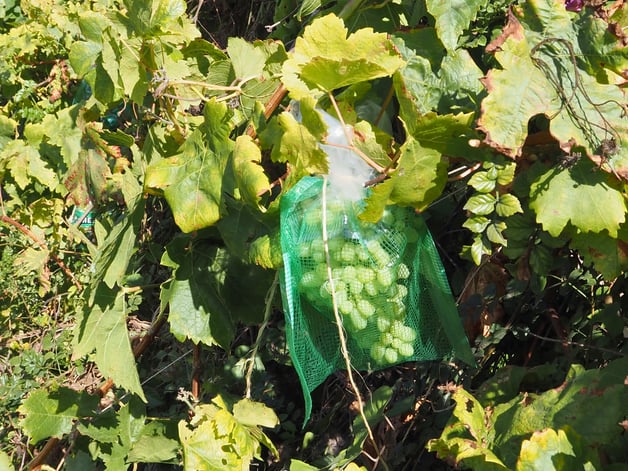
Why mesh works in a backyard for the same reason it works in a packing shed
We designed Fresh Mesh Wicketed for produce that has to breathe, stay visible, and hold up through handling. Air moves through it. You can see the fruit without opening anything. The structure holds its shape under weight.
Hang that same bag on a grape cluster and those properties do different work. Air keeps the fruit from sweating on a hot afternoon. Visibility means he can watch the fruit ripen without pulling the bag off. The mesh is a physical barrier that a squirrel does not want to chew through when there is easier food nearby.
Nobody on our team designed a bag for backyard pomegranates. The bag was already good at the thing he needed.
The reuse part matters more than it used to
Packaging conversations across the produce industry right now are largely about using less material. Lightweighting, right-sizing, moving from rigid to flexible.
A bag that gets used for three seasons in a home orchard is a small version of the same idea. It is not a compliance strategy and we would not present it as one. But it is a good reminder that durability and reuse are worth designing for, and that a bag built to survive a packing line has a lot of life left in it afterward.
Tell us what you are doing with them
We like these stories. If you have found a use for our bags that we did not plan for, in an orchard, a garden, a workshop, or anywhere else, send us a photo at info@foxbag.com.

